














Search is evolving faster than ever before.
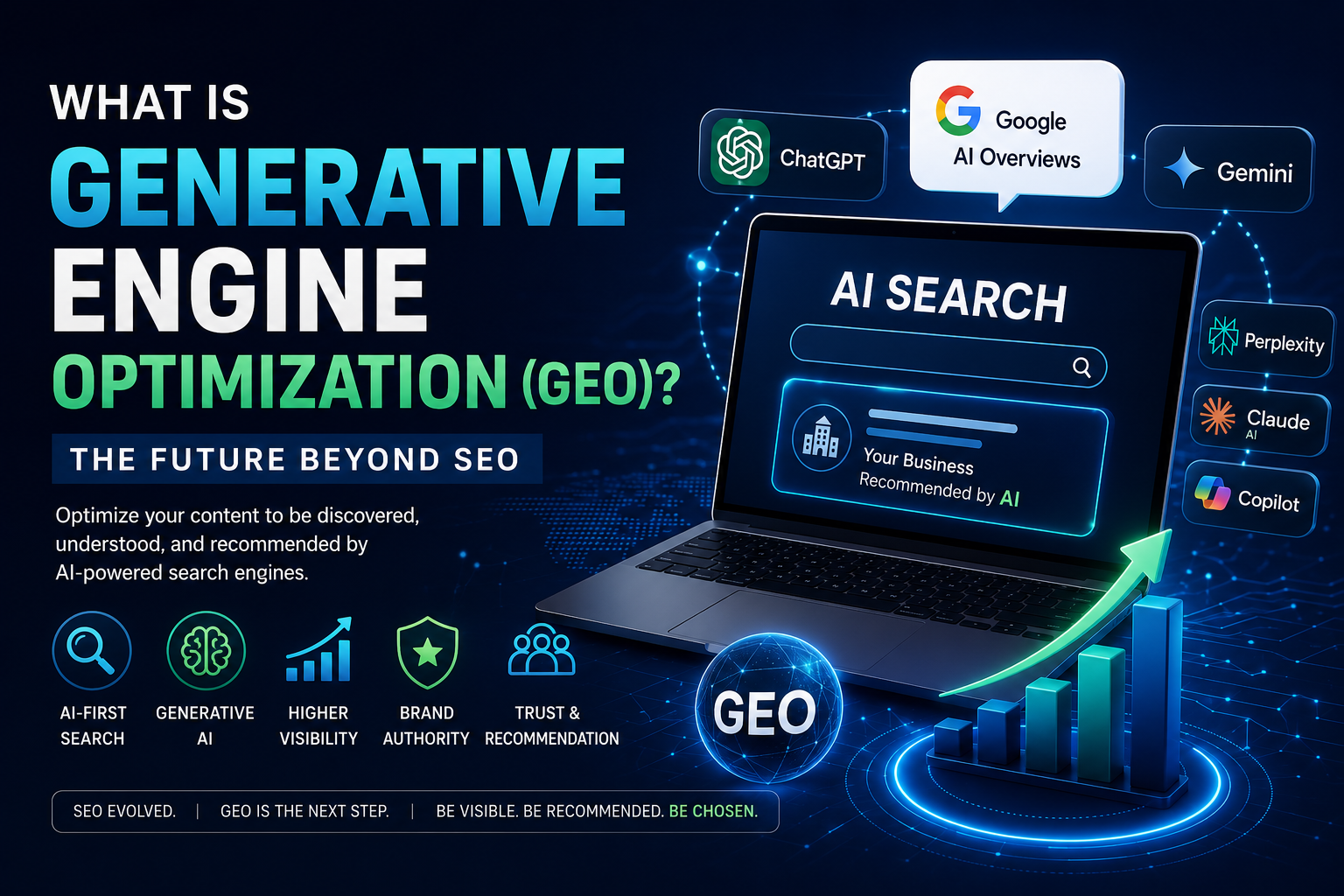
For decades, businesses focused on Search Engine Optimization (SEO) to rank on Google and attract website visitors. But in 2026, users are no longer relying solely on traditional search engines. Instead, they’re asking AI assistants like ChatGPT, Google AI Overviews, Gemini, Claude, Microsoft Copilot, and Perplexity AI for direct answers.
Rather than displaying a list of links, these AI-powered platforms generate complete responses by analyzing information from trusted websites, authoritative sources, and structured data.
This shift has introduced a new discipline called Generative Engine Optimization (GEO).
GEO helps businesses optimize their digital presence so AI engines can understand, trust, and recommend their content in AI-generated responses. Instead of focusing only on rankings, GEO is about becoming a credible source that AI systems confidently cite and recommend.
If your business wants to stay visible in the age of AI-powered search, understanding Generative Engine Optimization is no longer optional—it’s essential.
What is Generative Engine Optimization (GEO)?
Generative Engine Optimization (GEO) is the process of optimizing websites and digital content so that AI-powered search engines and generative AI models can easily discover, understand, and use that information when generating responses to users.
Unlike traditional SEO, which aims to improve rankings in search engine results pages (SERPs), GEO focuses on improving your chances of being referenced, cited, or recommended in AI-generated answers.
For example:
Instead of searching:
“Best AI marketing agency”
A user might ask:
“Which digital marketing agency can help improve my business’s AI visibility?”
An AI assistant may respond with a curated answer that includes businesses it considers trustworthy and relevant.
Your goal with GEO is to become one of those recommended businesses.
Why GEO Matters More Than Ever
The way people search has fundamentally changed.
Instead of clicking through multiple websites, users now expect immediate, conversational answers.
This shift offers businesses a major opportunity:
- Build authority beyond traditional rankings
- Increase brand trust through AI recommendations
- Reach customers earlier in the decision-making process
- Improve visibility across multiple AI platforms
- Future-proof your digital marketing strategy
Businesses that invest in GEO today will be better positioned as AI-driven search continues to grow.
GEO vs Traditional SEO
| SEO | GEO |
|---|---|
| Optimizes for search engines | Optimizes for AI engines |
| Focuses on keyword rankings | Focuses on AI recommendations |
| Success measured by rankings | Success measured by AI visibility |
| Prioritizes backlinks | Prioritizes authority and trust |
| Optimizes web pages | Optimizes knowledge and entities |
| Targets search results | Targets AI-generated answers |
SEO remains important, but GEO builds on it by adapting to how AI retrieves and synthesizes information.
How Generative AI Finds Information
AI systems don’t randomly select websites. They evaluate a range of signals to determine which content is accurate, trustworthy, and useful.
Some of the key factors include:
1. High-Quality Content
Content that provides original insights, answers user questions, and demonstrates expertise is more likely to be referenced.
2. Entity Recognition
AI understands businesses, products, services, and people as entities. Consistent branding and clear descriptions help AI identify your business correctly.
3. Structured Data
Schema markup helps AI interpret your website’s content, including services, reviews, FAQs, and organization details.
4. Authority and Trust
AI favors websites with strong reputations, expert authorship, quality backlinks, and consistent information across the web.
5. Fresh Information
Regularly updated content signals that your information is current and relevant.
Key Elements of an Effective GEO Strategy
Create Comprehensive Content
Rather than publishing short keyword-focused articles, create detailed resources that answer every aspect of a topic.
Optimize for Questions
Use headings such as:
- What is Generative Engine Optimization?
- How does GEO work?
- Why is GEO important?
- Can GEO replace SEO?
This structure aligns with how users interact with AI assistants.
Implement Structured Data
Use:
- Organization Schema
- Article Schema
- FAQ Schema
- Breadcrumb Schema
- Service Schema
Structured data improves AI’s understanding of your content.
Build Topical Authority
Instead of writing about unrelated topics, create a content cluster focused on AI search, SEO, digital marketing, and automation.
This helps AI recognize your expertise in a specific subject area.
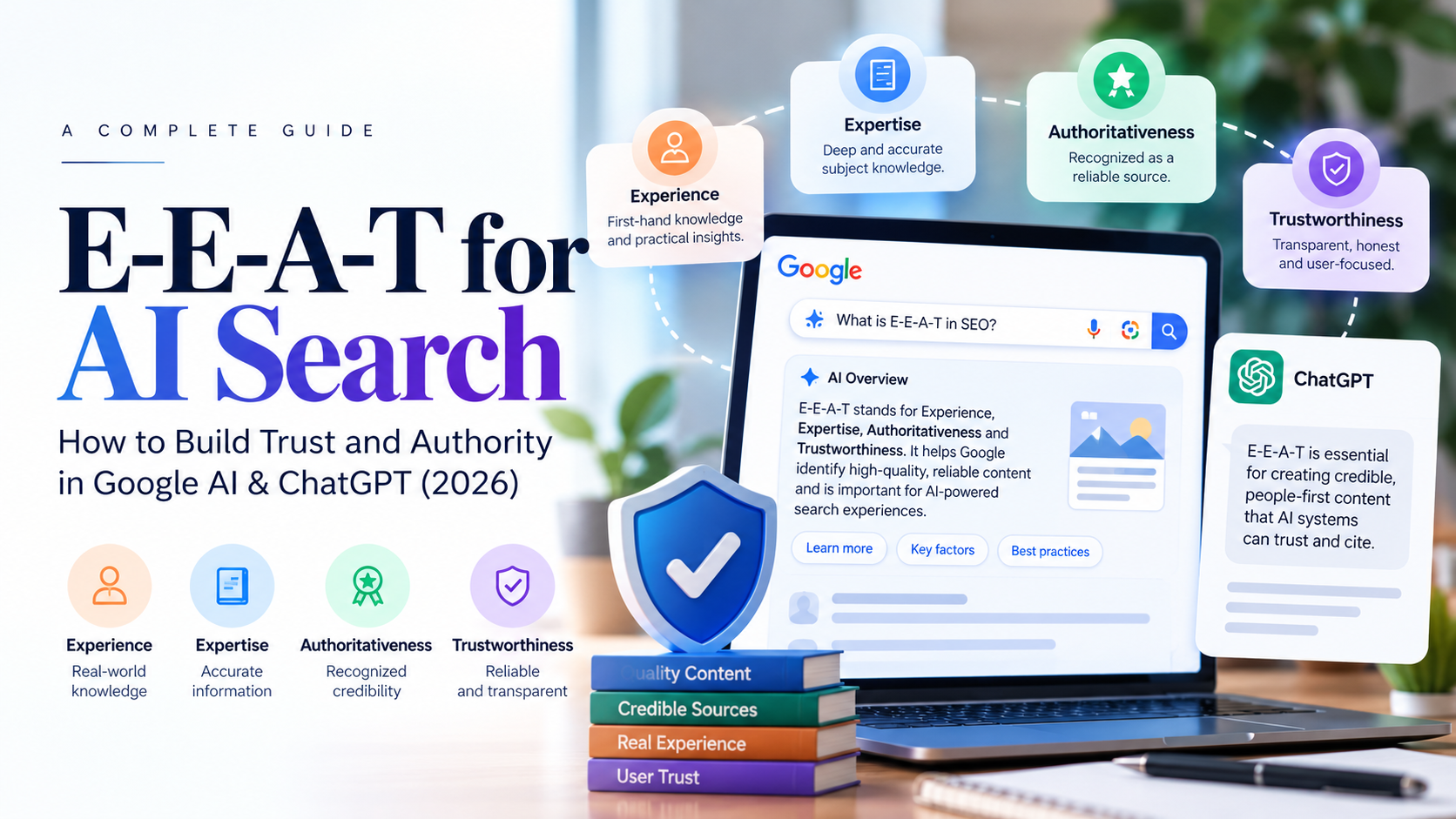
Improve EEAT
Google’s EEAT principles—Experience, Expertise, Authoritativeness, and Trustworthiness—are increasingly important for AI-driven search as well.
Include author profiles, case studies, client results, and original insights to strengthen credibility.
Common GEO Mistakes to Avoid
Many businesses are unknowingly reducing their AI visibility by making these mistakes:
- Publishing thin AI-generated content without human review
- Ignoring structured data
- Using outdated or duplicate information
- Focusing only on keyword density
- Neglecting author credibility
- Failing to update older content
- Weak internal linking
- Poor website performance
Avoiding these issues can significantly improve your AI discoverability.
How Digital Corn Helps Businesses with GEO
At Digital Corn, we combine technical SEO with modern AI optimization strategies to help businesses thrive in AI-powered search.
Our Generative Engine Optimization services include:
- AI Search Optimization
- Technical SEO Audits
- Content Strategy
- Schema Implementation
- EEAT Optimization
- Topic Cluster Planning
- AI Visibility Audits
- Google AI Overviews Optimization
- ChatGPT Visibility Strategy
- Website Performance Optimization
Our goal is simple: help businesses become trusted sources that AI platforms recognize and recommend.
Frequently Asked Questions
What is Generative Engine Optimization?
Generative Engine Optimization (GEO) is the practice of optimizing content and websites so AI-powered search engines and assistants can understand, cite, and recommend them in AI-generated responses.
Is GEO replacing SEO?
No. GEO complements SEO. Traditional SEO helps your website rank in search engines, while GEO improves your visibility within AI-generated answers.
Which AI platforms use GEO principles?
GEO is relevant for platforms such as ChatGPT, Google AI Overviews, Google Gemini, Claude, Microsoft Copilot, and Perplexity AI.
Why is GEO important for businesses?
As more users rely on AI assistants for information, businesses that optimize for AI visibility are more likely to be discovered and recommended during the customer decision-making process.
How can I improve my GEO strategy?
Focus on creating authoritative content, implementing structured data, building topical expertise, improving EEAT, and keeping your information accurate and up to date.
Conclusion
Generative Engine Optimization represents the next evolution of digital marketing. While SEO continues to play a crucial role, businesses must also prepare for AI-driven search experiences where recommendations matter more than rankings.
By investing in high-quality content, structured data, topical authority, and trust signals, organizations can improve their visibility across AI-powered platforms and stay competitive in the future of search.
Whether you’re a startup, enterprise, or growing brand, adopting GEO today will help ensure your business remains discoverable as AI reshapes how people search, learn, and make decisions.
STAY IN THE LOOP