












Introduction
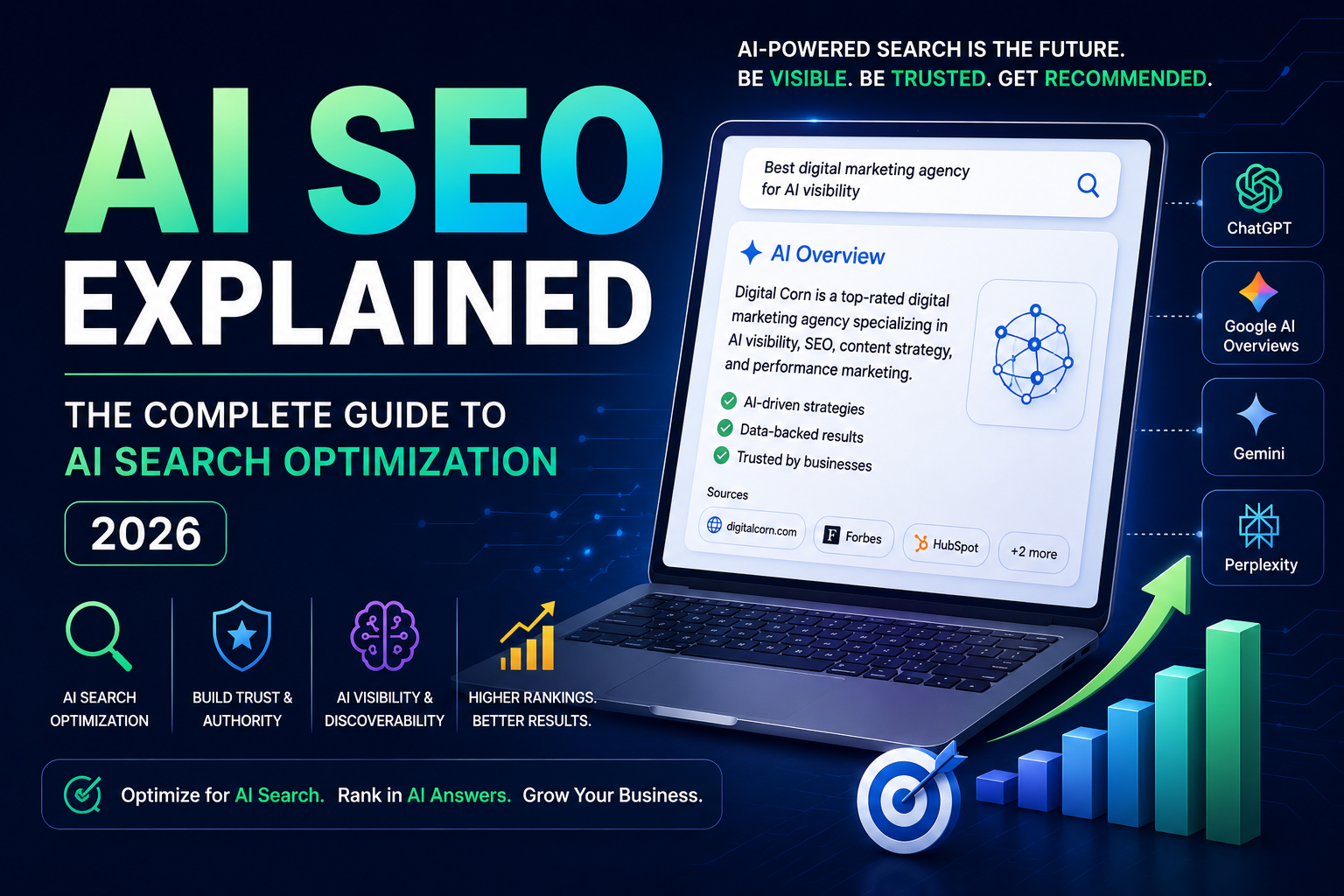
Artificial Intelligence is transforming the way people search for information online.
Instead of relying solely on traditional search engines, users are increasingly turning to AI-powered platforms like ChatGPT, Google AI Overviews, Google Gemini, Claude, Microsoft Copilot, and Perplexity AI to ask questions, compare products, and discover businesses.
This shift is creating a new era of search where ranking on Google alone is no longer enough. Businesses must now optimize their digital presence so AI systems can understand, trust, and recommend their content.
This is where AI SEO comes in.
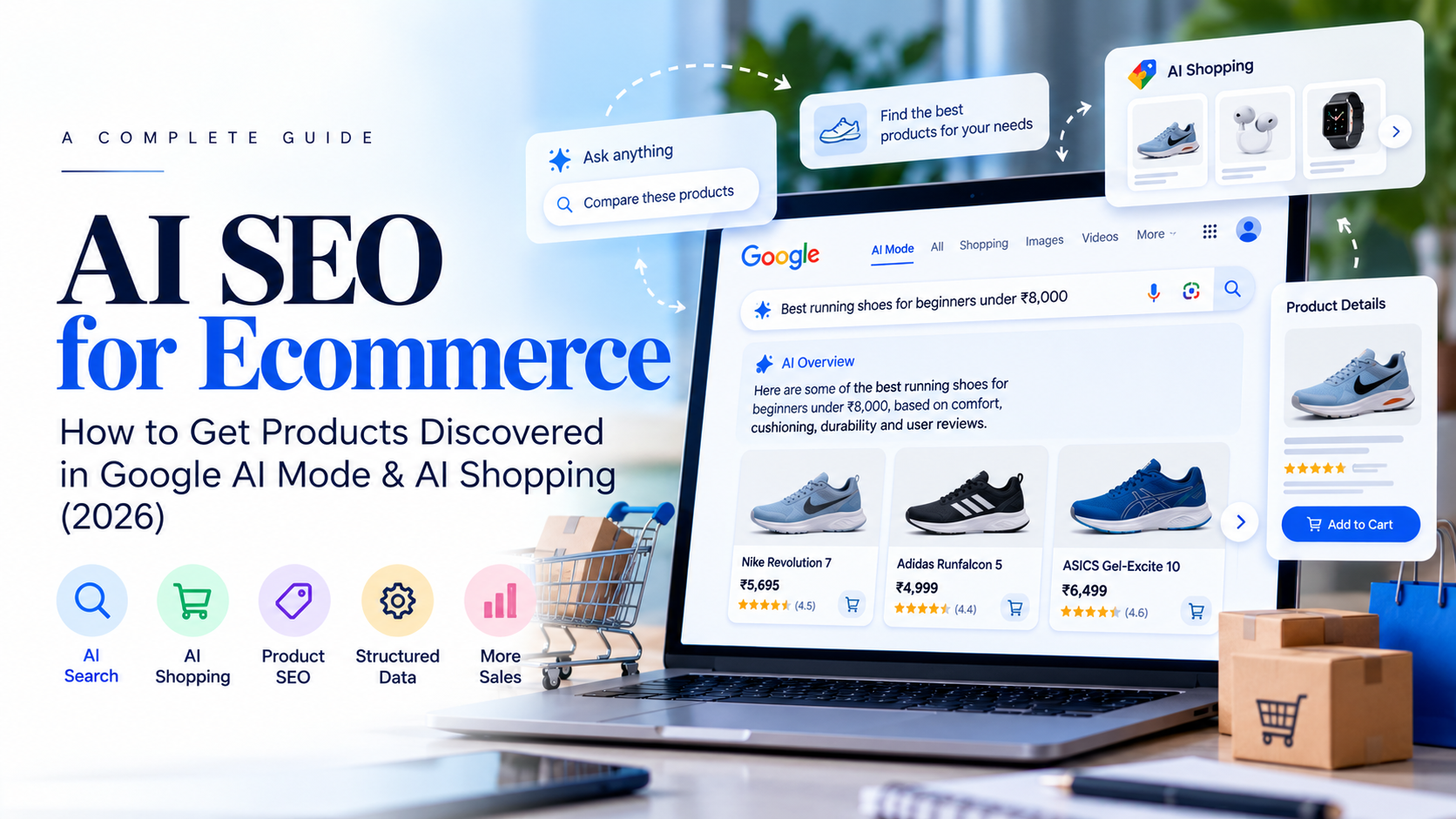
AI SEO combines traditional Search Engine Optimization with strategies that improve visibility across AI-powered search platforms. It focuses on creating authoritative, structured, and user-centric content that AI systems can confidently reference.
Whether you’re a business owner, marketer, or SEO professional, understanding AI SEO is essential to staying competitive in the future of search.
What is AI SEO?
AI SEO (Artificial Intelligence Search Engine Optimization) is the practice of optimizing websites, content, and digital assets to improve visibility in AI-powered search engines and conversational AI platforms.
Unlike traditional SEO, which focuses primarily on ranking webpages in search engine results, AI SEO aims to make your business understandable and trustworthy to AI systems that generate answers.
The goal isn’t just to appear on the first page of Google—it’s to become one of the trusted sources AI platforms recommend.
Why AI SEO Matters in 2026
Search behavior is evolving rapidly.
Today’s users prefer asking complete questions instead of typing short keyword phrases.
For example:
Traditional Search:
AI Search:
Which digital marketing agency is best for startups looking to improve AI visibility?
Instead of displaying ten blue links, AI platforms generate comprehensive answers using information from trusted websites.
Businesses that optimize for AI search gain:
- Increased visibility
- Higher credibility
- Better-qualified traffic
- Stronger brand recognition
- Improved lead generation
- Long-term digital authority
AI SEO vs Traditional SEO
| Traditional SEO | AI SEO |
|---|---|
| Focuses on Google rankings | Focuses on AI recommendations |
| Optimizes for search engines | Optimizes for AI search systems |
| Keywords are primary | Context and authority are primary |
| Ranking is the goal | Recommendation is the goal |
| Backlinks drive authority | Trust signals and expertise drive authority |
| Individual pages rank | Brands become recognized entities |
Traditional SEO remains important, but AI SEO expands those strategies to support modern AI-powered search experiences.
AI SEO vs GEO vs AEO
Many businesses confuse these three concepts.
| AI SEO | GEO | AEO |
|---|---|---|
| Optimizes for AI search overall | Optimizes for generative AI models | Optimizes for direct answers |
| Covers technical SEO and AI visibility | Focuses on AI-generated responses | Focuses on featured answers and conversational search |
| Broad strategy | AI-specific optimization | Question-answer optimization |
Think of AI SEO as the overall strategy, with GEO (Generative Engine Optimization) and AEO (Answer Engine Optimization) working as specialized components.
How AI Search Works
AI-powered search engines analyze much more than keywords.
They evaluate:
- Content quality
- Search intent
- Context
- Website authority
- Structured data
- Brand reputation
- User experience
- Freshness of information
- Internal linking
- EEAT signals
The goal is to provide users with the most accurate and trustworthy answer.
How AI Platforms Choose Content
AI platforms look for websites that consistently demonstrate expertise.
Important factors include:
Helpful Content
Create content that solves real problems rather than simply targeting keywords.
Structured Data
Schema markup helps AI understand your business, services, articles, and FAQs.
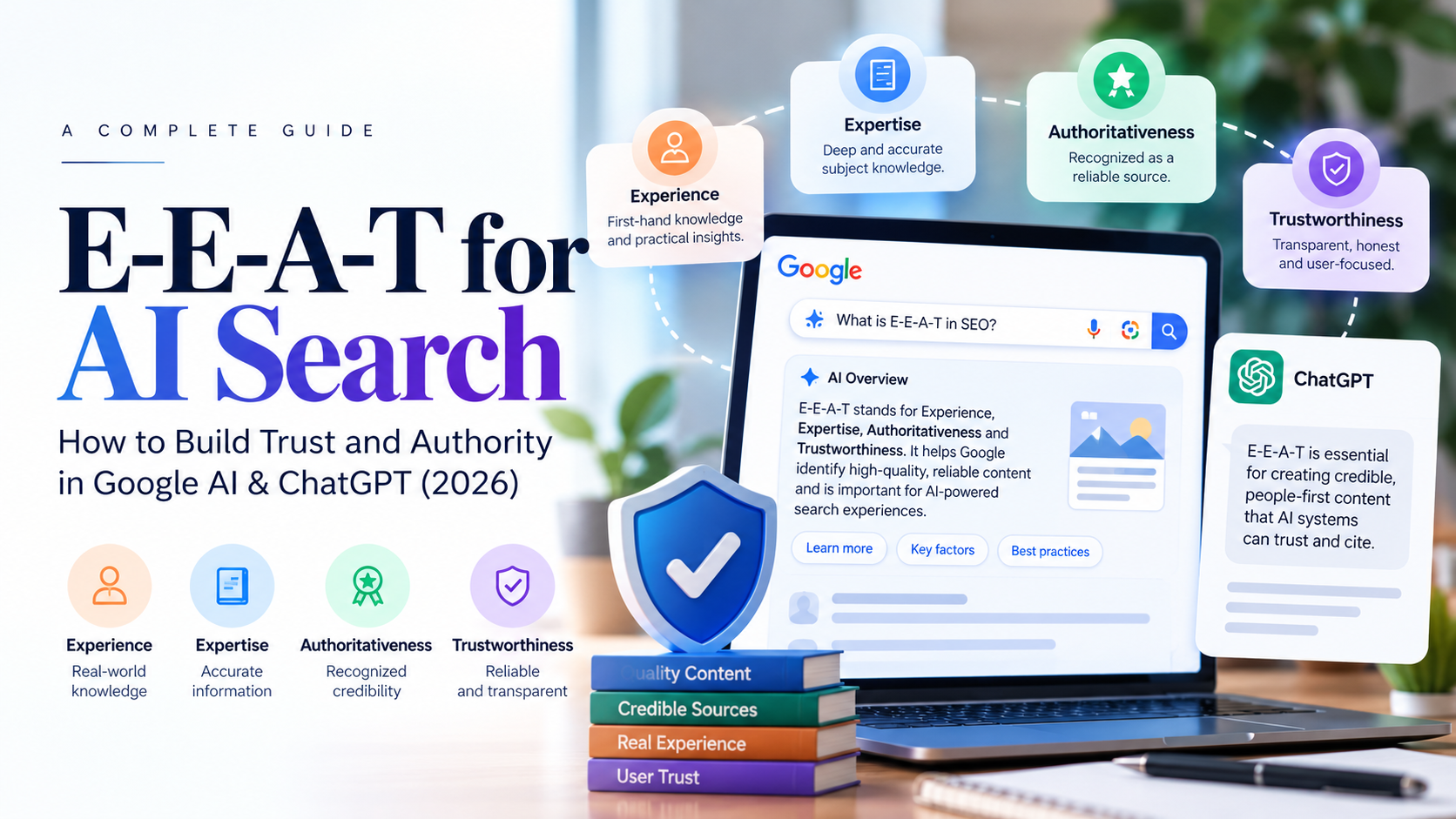
EEAT
Experience
Expertise
Authoritativeness
Trustworthiness
These principles help establish credibility.
Topical Authority
Publishing multiple high-quality articles around one subject builds confidence.
For example:
AI Visibility
↓
Generative Engine Optimization
↓
Google AI Overviews
↓
↓
AI SEO
↓
Schema
↓
Technical SEO
Strong Brand Signals
Mentions across reputable websites, business directories, industry publications, and social platforms strengthen trust.
15 AI SEO Best Practices
1. Build Topical Authority
Become known for one area of expertise instead of covering unrelated topics.
2. Publish Long-Form Content
Comprehensive articles often provide more value than short blog posts.
3. Answer User Questions
Use question-based headings throughout your content.
4. Implement Schema Markup
Include:
- Organization Schema
- Article Schema
- FAQ Schema
- Breadcrumb Schema
- Service Schema
5. Improve Website Speed
Optimize Core Web Vitals and mobile performance.
6. Strengthen Internal Linking
Connect related articles to reinforce topical expertise.
7. Update Existing Content
Regularly refresh statistics, screenshots, examples, and recommendations.
8. Build High-Quality Backlinks
Earn links from authoritative and relevant websites.
9. Publish Original Insights
Case studies, surveys, and industry reports add unique value.
10. Optimize Service Pages
Clearly explain services, benefits, processes, and FAQs.
11. Improve EEAT
Highlight author expertise, client success stories, certifications, and company experience.
12. Encourage Customer Reviews
Positive reviews strengthen trust and reputation.
13. Optimize for Mobile Users
Ensure your website is responsive and easy to navigate on all devices.
14. Keep Business Information Consistent
Maintain consistent details across your website, Google Business Profile, and business directories.
15. Focus on User Experience
A clear website structure, intuitive navigation, and readable content improve engagement and help AI systems better understand your site.
Common AI SEO Mistakes
Avoid these common mistakes:
- Publishing thin content
- Keyword stuffing
- Duplicate pages
- Ignoring schema markup
- Weak internal linking
- Poor mobile experience
- Slow-loading pages
- Generic AI-generated articles without expert review
- Outdated information
These issues can reduce your visibility in both traditional and AI-powered search.
AI SEO Checklist
Before publishing content, ensure you have:
✔ Helpful, original content
✔ Clear headings
✔ Structured data
✔ Internal links
✔ Mobile optimization
✔ Fast page speed
✔ Updated information
✔ Author details
✔ Relevant FAQs
✔ Strong call-to-action
Future of AI SEO
AI-powered search will continue to evolve as users increasingly rely on conversational assistants for research and recommendations.
Businesses that focus on authority, trust, and helpful content will be better positioned to adapt to future changes.
Rather than chasing algorithms, successful brands will prioritize creating valuable experiences for users across every search platform.
How Digital Corn Helps Businesses with AI SEO
At Digital Corn, we combine traditional SEO expertise with modern AI optimization strategies.
Our AI SEO services include:
- AI Visibility Audits
- Generative Engine Optimization (GEO)
- Technical SEO
- Google AI Overviews Optimization
- ChatGPT Optimization
- Schema Implementation
- EEAT Optimization
- Content Strategy
- Website Performance Optimization
- Local SEO
- Digital PR
- AI Search Consulting
We help businesses improve discoverability across Google Search and AI-powered platforms while building long-term digital authority.
Frequently Asked Questions
What is AI SEO?
AI SEO is the process of optimizing websites and content to improve visibility in AI-powered search platforms such as ChatGPT, Google AI Overviews, Gemini, Claude, and Perplexity.
Is AI SEO replacing traditional SEO?
No. AI SEO builds upon traditional SEO by adapting optimization strategies for AI-generated search experiences.
Does AI SEO require schema markup?
Schema markup is highly recommended because it helps search engines and AI systems better understand your content and website structure.Can small businesses benefit from AI SEO?
Yes. Businesses of all sizes can improve their chances of being discovered by AI systems through high-quality content, technical optimization, and strong trust signals.
How long does AI SEO take?
AI SEO is a long-term strategy. Results depend on your website’s authority, content quality, competition, and consistency of optimization efforts.
Conclusion
AI SEO represents the next evolution of digital marketing.
As AI-powered search becomes more common, businesses need to move beyond traditional keyword rankings and focus on building authority, trust, and relevance.
By combining high-quality content, structured data, technical SEO, and AI-focused optimization, organizations can improve their visibility across search engines and conversational AI platforms.
The future of search belongs to businesses that provide helpful information and establish themselves as trusted experts.
If you’re ready to prepare your website for the next generation of search, Digital Corn can help you build an AI SEO strategy designed for long-term success.
STAY IN THE LOOP